Environmental Health Inspection of Public Facilities and Sanitation at Pasar Rahmat Samarinda
Keywords:
Public facilities; Traditional market; Environmental health inspection; Environmental parameters; Healthy marketAbstract
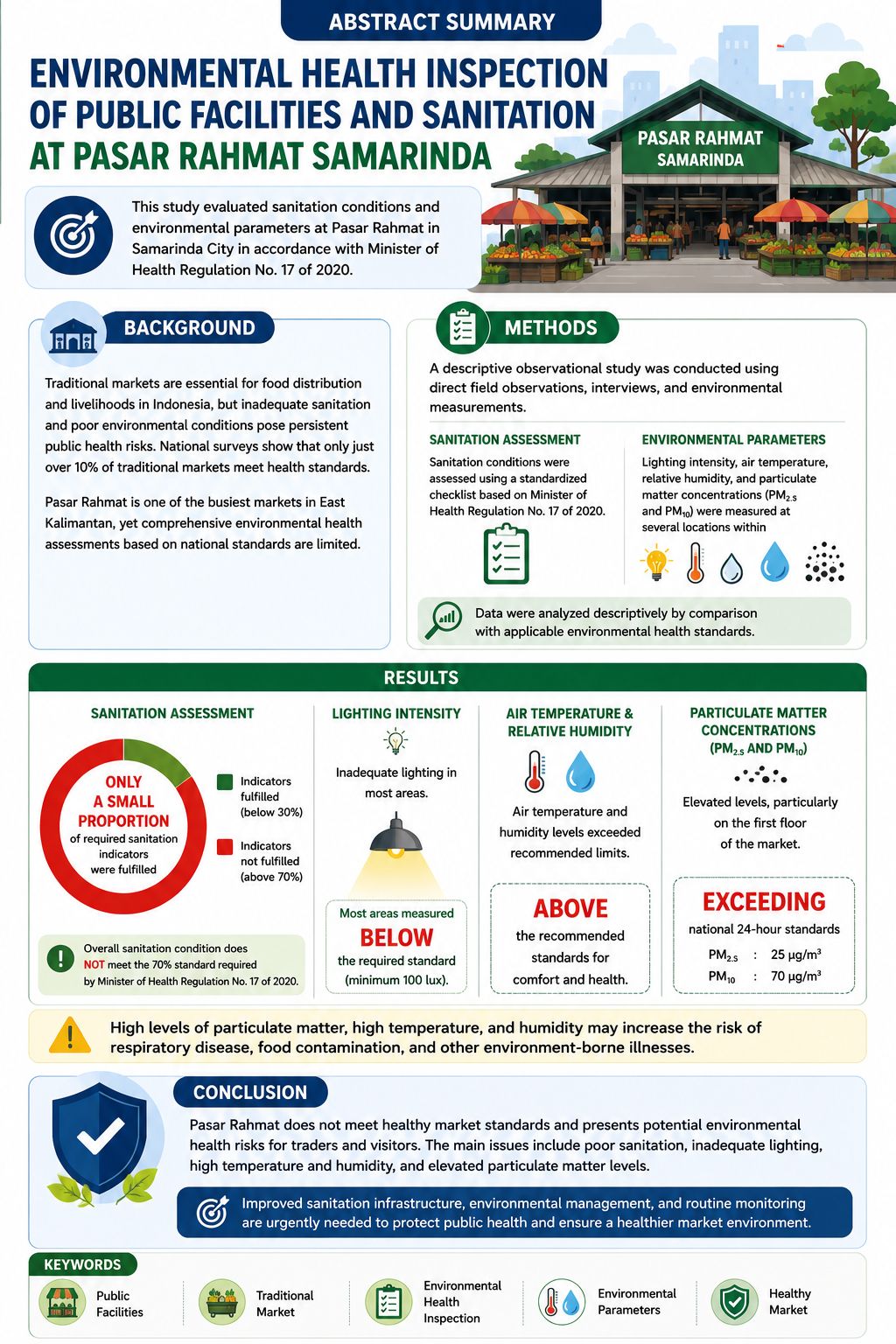
Background: Traditional markets play an essential role in food distribution and community livelihoods in Indonesia; however, inadequate sanitation and poor environmental conditions remain persistent public health challenges. Pasar Rahmat in Samarinda City is one of the busiest traditional markets in East Kalimantan, yet comprehensive environmental health assessments based on national standards are limited. This study aimed to evaluate sanitation conditions and environmental parameters at Pasar Rahmat in accordance with Minister of Health Regulation No. 17 of 2020.
Methods: This study employed a descriptive observational design using direct field observations, interviews, and environmental measurements. Sanitation conditions were assessed using a standardized checklist, while environmental parameters included lighting intensity, air temperature, relative humidity, and particulate matter concentrations (PM2.5 and PM10). Measurements were conducted at several locations within the market and analyzed descriptively by comparison with applicable environmental health standards.
Results: The sanitation assessment indicated that only a small proportion of the required sanitation indicators were fulfilled. Environmental measurements showed inadequate lighting in most areas, air temperatures and humidity levels exceeding recommended limits, and elevated PM2.5 and PM10 concentrations, particularly on the first floor of the market.
Conclusion: Pasar Rahmat does not meet healthy market standards and presents potential environmental health risks for traders and visitors, underscoring the need for improved sanitation infrastructure, environmental management, and routine monitoring.
Downloads